Posts mit dem Label Post in English werden angezeigt. Alle Posts anzeigen
Posts mit dem Label Post in English werden angezeigt. Alle Posts anzeigen
Freitag, 29. Juni 2012
Zaydi Rebel Gains Another Obstacle to National Dialogue in Yemen
Ein Gastbeitrag von Fernando Carvajal.
The political transition in Yemen continues obstructed by infighting, stalled military restructuring, presence of Islamic militants, a secessionist movement and an eight year-old rebellion in the north by a Zaydi group holding near autonomy over the province of Sadah. The rebels, under the political and spiritual leadership of Abd al-Malek bin Badr al-Din al-Houthi, have expressed their conditional willingness to participate in the upcoming National Dialogue process, but very few see any realistic possibility the group will loosen its grip on authority over the province that grants them protection and plenty of political capital.


Freitag, 4. Mai 2012
Mauritania - a country on the edge
It seems that all Mauritania's sources of discontent are erupting at once. But protests are nothing new in this land where a coup has been the answer to every political ill, whether real or imagined, for decades. Ein Gastbeitrag von Anita Hunt.
Mittwoch, 28. März 2012
History in the making – How the way media are covering events today affects how they will be told tomorrow
A Guest Post by Stefanie Groth
I am asking myself these days what children will be told in school about the ‘Arab Spring’ in ten to twenty years. What their textbooks will read like about the events that were triggered in 2011, when a young Tunisian man called Mohammed Bouazizi immolated himself out of protest, and whose suicide then reverberated in a wave of upheavals across the Middle East that put the whole region into a seminal process of transition. How will this part of history that is still in the making be told?
I am asking myself these days what children will be told in school about the ‘Arab Spring’ in ten to twenty years. What their textbooks will read like about the events that were triggered in 2011, when a young Tunisian man called Mohammed Bouazizi immolated himself out of protest, and whose suicide then reverberated in a wave of upheavals across the Middle East that put the whole region into a seminal process of transition. How will this part of history that is still in the making be told?
Donnerstag, 8. März 2012
They Say Feminists Have no Sense of Humor…
By Adi Livny
Some say feminists have no sense of humor. I found myself wondering if this applied to me as well, when I caught a glimpse of the posters recently released by the Israeli anti-occupation group "Solidarity Sheikh Jarrah". The posters, which use the image of rape in order to emphasize the crimes of the settlement enterprise, specifically target the illegal (even under Israeli law) settlement of "Migron". They were posted on the movement’s Facebook page on Sunday and promptly brought about such heated criticism that they were removed several hours later. 

Montag, 20. Februar 2012
Elections in Yemen: The roadblock to change
Ein Gastkommentar von Will Picard
On February 21, Yemen will hold a presidential election that will defy almost every notion of what an election should be. Contrary to Yemeni law, the “election” will feature only one candidate, whose victory has been decided ahead of time; but even if the election’s result is certain, its effects are difficult to predict.
On February 21, Yemen will hold a presidential election that will defy almost every notion of what an election should be. Contrary to Yemeni law, the “election” will feature only one candidate, whose victory has been decided ahead of time; but even if the election’s result is certain, its effects are difficult to predict.
Donnerstag, 16. Februar 2012
Mali`s Tuareg rebellion: A catastrophe in the making
Ein Gastbeitrag von Alex Thurston
Mali’s presidential elections, now
little more than two months away, were supposed to mark the country’s
triumph as a young and stable democracy. Mali approaches a milestone
– the second peaceful transfer of power from one elected leader to
another – that many political scientists consider the definition of
a consolidated democracy. Outgoing President Amadou Toumani Touré,
who has served since 2002, had hoped to leave his country a legacy of
peace, infrastructural development, and prosperity derived from
mining and other growth industries. Touré, often known by the
abbreviation “ATT,” has faced serious political and security
crises during his rule, including a bitter row over the country’s
new family code and attacks by Al Qaeda in the Islamic Maghreb
(AQIM). Yet as of this fall, ATT’s legacy appeared basically
intact.
Dienstag, 10. Januar 2012
On “Islamists”, electorally
First post-revolutions elections offered groups known as “Islamists” first positions in three Arab countries. This article attemps at explaining some of the reasons behind these results, and argues that post elections “islamists” will not remain the same forces that they were during their long journeys outside power and “official” politics. A guest commentary by Ziad Majed.
Mittwoch, 9. November 2011
The Sahel after the fall of the »Brother Leader«: Qadhafi`s legacy haunts Niger
Ein Gastbeitrag von Alex Thurston
Colonel Muammar Qadhafi is dead, but his friendships with Libya’s southern neighbors continue to complicate Sahelian politics. Niger in particular has keenly felt the impact of Libya’s civil war.
Montag, 22. August 2011
Challenging Manama’s Narrative
Ein Gastkommentar von Faraz Sanei, Nahost-Analyst bei Human Rights Watch (HRW) in New York.
On the afternoon of April 12, plain-clothes security officials arrested Ghazi Farhan, a businessman, in his office parking lot. They blindfolded and handcuffed him and took him to a detention facility, where officers interrogated him, beat him with a hose, and forced him to sign a confession that he had participated in anti-government demonstrations. Authorities kept Farhan in incommunicado detention for 49 days, and prevented him from meeting with his lawyer and his family to prepare his defense.
On the afternoon of April 12, plain-clothes security officials arrested Ghazi Farhan, a businessman, in his office parking lot. They blindfolded and handcuffed him and took him to a detention facility, where officers interrogated him, beat him with a hose, and forced him to sign a confession that he had participated in anti-government demonstrations. Authorities kept Farhan in incommunicado detention for 49 days, and prevented him from meeting with his lawyer and his family to prepare his defense.
Dienstag, 16. August 2011
Who are the Muslims of Norway?
Ein Gastbeitrag von Kari Vogt, emeritierte Professorin am Institut für Kulturwissenschaften und orientalische Sprachen an der Universität Oslo / by Kari Vogt, Researcher, Institute of Cultural Studies, University of Oslo, Norway.
Freitag, 24. Juni 2011
Interview with Jamil Sayyed - »Germany is responsible for my detention«
For four years Jamil Sayyed, former chief of Lebanon's General Directorate of General Security, was detained as one of the main suspects in the murder of former Lebanese Prime Minister Rafiq Hariri. Robert Chatterjee and Christoph Dinkelaker met Sayyed in Beirut this April. In this interview he lashes out against the German UN-Investigator Detlev Mehlis as well as against Germany's foreign intelligence agency BND and the German news magazine Der Spiegel. A German translation of this interview was published in the German quarterly magazine zenith.

Alsharq: What would you do if you met Detlev Mehlis today?
Jamil Sayyed: The first feeling that would come to my mind is that I would have to vomit.
What led to your detention – and to your release?
It was a long battle that lasted for 4 years to get freed from my political and arbitrary detention. I was never exposed, neither by Detlev Mehlis nor his team , nor to any witness, proof or charges. On August 30 2005, British officer Ken Korlett from the United Nations International Independent Investigation Commission (UNIIIC), came to me with a letter, sent to me by the president of UNIIIC Mr. Mehlis, who had himself signed the paper. That Search Warrant read: »According to witnesses heard by the commission....Jamil Sayyed should be considered as suspect...«. From the day they presented the letter to me and multiple times later on, I asked them: Where are your witnesses? No answer!

Alsharq: What would you do if you met Detlev Mehlis today?
Jamil Sayyed: The first feeling that would come to my mind is that I would have to vomit.
What led to your detention – and to your release?
It was a long battle that lasted for 4 years to get freed from my political and arbitrary detention. I was never exposed, neither by Detlev Mehlis nor his team , nor to any witness, proof or charges. On August 30 2005, British officer Ken Korlett from the United Nations International Independent Investigation Commission (UNIIIC), came to me with a letter, sent to me by the president of UNIIIC Mr. Mehlis, who had himself signed the paper. That Search Warrant read: »According to witnesses heard by the commission....Jamil Sayyed should be considered as suspect...«. From the day they presented the letter to me and multiple times later on, I asked them: Where are your witnesses? No answer!
Donnerstag, 26. Mai 2011
Four months after the beginning of the revolution – What’s new in Egypt?
Ich bin derzeit auf Einladung der Deutschen Welle - Akademie zu Gast beim Young Media Summit 2011 in Kairo. 17 junge Blogger und Journalisten aus Deutschland und der Arabischen Welt treffen sich, diskutieren, tauschen sich aus. Gestern war ich mit Emna aus Tunesien und Bassem aus Ägypten rund um den Tahrir-Platz unterwegs und wir haben mit Ägyptern über ihre Erfahrungen und Erwartungen gesprochen. Hier ist das Ergebnis, das auch auf dem Blog des Young Media Summit nachzulesen ist:
Four months have passed since the beginning of the revolution in Egypt on January 25. The regime has changed, but what else? Did the relationship between the state institutions and the people change since Husni Mubarak was forced to resign? And how do Egyptians assess the security situation in their country these days? How did Social Media inspire Egyptians before and after the revolution? And first of all – how do people celebrate and remember their successful Intifada?
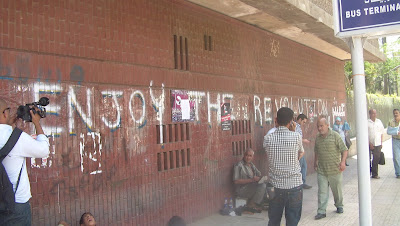
Four months have passed since the beginning of the revolution in Egypt on January 25. The regime has changed, but what else? Did the relationship between the state institutions and the people change since Husni Mubarak was forced to resign? And how do Egyptians assess the security situation in their country these days? How did Social Media inspire Egyptians before and after the revolution? And first of all – how do people celebrate and remember their successful Intifada?

Montag, 23. Mai 2011
Nakba - "People did not care if there was shooting"
Liebe Leserinnen und Leser,
in den letzten Tagen wurde sehr viel über die Geschehnisse am Nakba-Tag in Palästina, Israel und an den Grenzen geschrieben. Unsere Bekannte Hiba aus dem palästinensischen Flüchtlingslager Bourj al-Barajne in Beirut, hat die dramatischen Ereignisse an der israel-libanesischen Grenze selbst miterlebt.
This year, Nakba (“the catastrophe”) was supposed to have a different taste. It was supposed to tell the world that denies our existence: “Hey, here we are, this is our land, and this is our right. Our right to return will not die.” The way to the Maroun al-Ras was a mass movement of Palestinian people, the opposite way that the original displacement occurred. Everything was opposite from the lives that we have lived. On the way south we repeatedly noticed that it was the most beautiful scenery we have ever seen, the air was kinder, the morning sun was brighter, and even national and traditional revolutionary songs that we have been hearing since childhood took on a new meaning that day. We were going to Palestine, the air smelt of the soil of Palestine. That day there was hope that we would return. Our numbers and our determination put that dream closer to becoming a reality than ever before.
Montag, 28. Februar 2011
Interview mit einer britisch-libyschen Oppositionellen aus London
In keiner anderen europäischen Stadt leben so viele Libyer wie in London. Marina Khatibi hat eine junge britisch-libysche Aktivistin interviewt, die in der englischen Hauptstadt Proteste gegen Gadhafis Regime organisiert.
Who are the people that are involved in the Libyan Opposition movement in London?
Just people who are determined to help change people’s lives. People who are willing to attend demonstrations and are willing to take action, that’s all.
Are there any leaders in the Opposition movement? If so, who are they?
When you are in an opposition I don’t believe there is a hierarchy of importance or leadership, everyone pulls together and achieves the best they can as one big whole community. There are organisers of events but even at the many events there is not just one speaker, everyone is encouraged to contribute!
Who are the people that are involved in the Libyan Opposition movement in London?
Just people who are determined to help change people’s lives. People who are willing to attend demonstrations and are willing to take action, that’s all.
Are there any leaders in the Opposition movement? If so, who are they?
When you are in an opposition I don’t believe there is a hierarchy of importance or leadership, everyone pulls together and achieves the best they can as one big whole community. There are organisers of events but even at the many events there is not just one speaker, everyone is encouraged to contribute!
Montag, 29. November 2010
Lebanon at stake
Liebe Leserinnen und Leser,
es folgt ein Gastbeitrag der libanesischen Journalistin Sarah El-Richani zu gegenwärtigen politischen Entwicklungen im Zedernstaat. Zurzeit promoviert sie in Erfurt über das libanesische Mediensystem. Auf Bitten vieler Alsharq-Freunde, die nicht deutsch sprechen, veröffentlichen wir den Artikel in seinem englischen Original.
As the truce brokered by Lebanese brawling camps for the Al-Adha feast holidays and Independence Day came to an end early last week, the weary and the wary in Lebanon are holding their breath.
es folgt ein Gastbeitrag der libanesischen Journalistin Sarah El-Richani zu gegenwärtigen politischen Entwicklungen im Zedernstaat. Zurzeit promoviert sie in Erfurt über das libanesische Mediensystem. Auf Bitten vieler Alsharq-Freunde, die nicht deutsch sprechen, veröffentlichen wir den Artikel in seinem englischen Original.
As the truce brokered by Lebanese brawling camps for the Al-Adha feast holidays and Independence Day came to an end early last week, the weary and the wary in Lebanon are holding their breath.
Sonntag, 5. Juli 2009
No more Sense of humor in Lebanon? - Ein Gastkommentar
Nach der für libanesische Verhältnisse relativ geräuschlosen und schnellen Wahl Saad Hariris scheint fürs Erste Ruhe in den Zedernstaat einzukehren. Zwar steht die endgültige Regierungsbildung noch aus und fundamentale Fragen sind noch immer nicht geklärt. Dennoch richten sich die Libanesen zurzeit ihren Blick auf die "Sommerpause" von der Politik - deren Höhepunkt bilden tradtionell die Sommerfestivals, die oft auch internationale Stars anlocken.
Eines der bekanntesten Festivals in Beit ad-Din, inmitten einer Schlosskulisse im Chouf-Gebirge, sollte in diesem Jahr mit einem besonderen Highlight aufwarten - dem französisch-marokkanischen Komiker Gad El-Maleh, der eine große libanesische Fangemeinde besitzt. Allerdings sah sich der jüdischstämmige El-Maleh gezwungen, die Aufführung seines Bühnenprogramms Papa est en haut am 13.,14. und 15. Juli 2009 abzusagen, nachdem im Libanon eine öffentliche Diskussion über El-Maleh, seine Vergangenheit und insbesondere sein Verhältnis zu Israel entbrannte.
Der Hizb Allah-Sender Al-Manar hatte die Diskussion angefacht und Anfang Juni behauptet, El-Maleh sei nicht nur ein Befürworter Israels, sondern habe gar in der israelischen Armee gedient. El-Maleh und die Veranstalterin des Beit ad-Din-Festivals Nura Jumblatts, Frau von Walid Joumblatt) wiesen die Vorwürfe als unbegründet und das von al-Manar veröffentlichte Foto als Verwechslung zurück. Der Sender besteht aber weiterhin auf seiner Darstellung und verweist auf Aussagen El-Malehs in einem TV-Interview.
Inzwischen wird auf diversen Foren und auch bei Facebook heiß über den Fall El-Maleh diskutiert, nicht wenige sehen ihn stellvertretend für die Fragen von kultureller Freiheit und politischer Stellungnahme.
Eine libanesische Freundin legt uns in dem folgenden Kommentar ihre Sichtweise dar:
It happened once in 1990 and here it happens again in 2009! Gad El-Maleh cancelled his tour to Lebanon just like Patrick Bruel did in the 1990. What is common between these two artists? They are both French, Jew and they are accused to support Israel.
It all started when Al Manar Television started to broadcast right after the Beiteddine organizing committee announced this year program which includes a 3 day appearance for the French Morrocan comedian, reports about El-Maleh claiming that he fought in the Israeli Defense Forces and he is "Israel's Francophone Ambassador". Whether those accusations are true or not are still a subject of debate and controversy in the country.
Lebanese as usual are split between those defending El-Maleh and whishing that he could change his mind about coming back to Lebanon and disregard all the rumors that were fabricated to distort his image and those who are strictly against his coming and demanding a boycott of the Pro Israeli Artist.
El-Maleh was scheduled to put on two performances in Lebanon, but due to overwhelming demand the sponsors added a third date on this tour. Of course this was prior to the large media campaign conducted against the French comic. El-Maleh’s tour of Lebanon was sold out; but this fact did not stop those who masterminded this campaign to tarnish his reputation against what they described as an “Israeli attempt to infiltrate Lebanon.”
In so many words Hizbullah has accused Walid Jumblatt, through the festival organized by his wife, Nora, of wanting to bring an Israeli soldier to Lebanon. Hizbullah emphasized also the fact that the performance of Gad El Maleh on July the 12th coincides with the 3rd anniversary of the Israeli war against Lebanon and thus will be offensive against the Lebanese people.
It may be true that Gad El-Maleh is a supporter of Israel and it may be true that he finds “Zionism the perfect political system to safeguard the Jews” but what does his statements has to do with culture and humor? This artist is coming to Lebanon to perform on a public stage that is neither Israeli nor Jew. He didn’t come to remind us of our differences and our never ending split between a 14th and an 8th march. He is not here to open subjects about the role of the state and the weapon of Hizbullah. He is not here to talk about the Palestinian refugees in the camps and their missing rights. And most importantly he did not come here to resolve the Middle Eastern conflict. He just came to offer us some laughs and present to us an innovative show.
The questions that lots of Lebanese are asking to themselves now are what next? Is Hizbullah going to be always allowed to practice censorship on things they find a threat to their presence? Are Woody Allen movies and Freud books are going to be banned? Where is the role of the government in this entire affair? Why there were no charges pressed against Al Manar which is accused of disinformation or basing it’s reporting on dubious sources? And finally is this going to be repeated in the future and what are the guarantees?
Eines der bekanntesten Festivals in Beit ad-Din, inmitten einer Schlosskulisse im Chouf-Gebirge, sollte in diesem Jahr mit einem besonderen Highlight aufwarten - dem französisch-marokkanischen Komiker Gad El-Maleh, der eine große libanesische Fangemeinde besitzt. Allerdings sah sich der jüdischstämmige El-Maleh gezwungen, die Aufführung seines Bühnenprogramms Papa est en haut am 13.,14. und 15. Juli 2009 abzusagen, nachdem im Libanon eine öffentliche Diskussion über El-Maleh, seine Vergangenheit und insbesondere sein Verhältnis zu Israel entbrannte.
Der Hizb Allah-Sender Al-Manar hatte die Diskussion angefacht und Anfang Juni behauptet, El-Maleh sei nicht nur ein Befürworter Israels, sondern habe gar in der israelischen Armee gedient. El-Maleh und die Veranstalterin des Beit ad-Din-Festivals Nura Jumblatts, Frau von Walid Joumblatt) wiesen die Vorwürfe als unbegründet und das von al-Manar veröffentlichte Foto als Verwechslung zurück. Der Sender besteht aber weiterhin auf seiner Darstellung und verweist auf Aussagen El-Malehs in einem TV-Interview.
Inzwischen wird auf diversen Foren und auch bei Facebook heiß über den Fall El-Maleh diskutiert, nicht wenige sehen ihn stellvertretend für die Fragen von kultureller Freiheit und politischer Stellungnahme.
Eine libanesische Freundin legt uns in dem folgenden Kommentar ihre Sichtweise dar:
It happened once in 1990 and here it happens again in 2009! Gad El-Maleh cancelled his tour to Lebanon just like Patrick Bruel did in the 1990. What is common between these two artists? They are both French, Jew and they are accused to support Israel.
It all started when Al Manar Television started to broadcast right after the Beiteddine organizing committee announced this year program which includes a 3 day appearance for the French Morrocan comedian, reports about El-Maleh claiming that he fought in the Israeli Defense Forces and he is "Israel's Francophone Ambassador". Whether those accusations are true or not are still a subject of debate and controversy in the country.
Lebanese as usual are split between those defending El-Maleh and whishing that he could change his mind about coming back to Lebanon and disregard all the rumors that were fabricated to distort his image and those who are strictly against his coming and demanding a boycott of the Pro Israeli Artist.
El-Maleh was scheduled to put on two performances in Lebanon, but due to overwhelming demand the sponsors added a third date on this tour. Of course this was prior to the large media campaign conducted against the French comic. El-Maleh’s tour of Lebanon was sold out; but this fact did not stop those who masterminded this campaign to tarnish his reputation against what they described as an “Israeli attempt to infiltrate Lebanon.”
In so many words Hizbullah has accused Walid Jumblatt, through the festival organized by his wife, Nora, of wanting to bring an Israeli soldier to Lebanon. Hizbullah emphasized also the fact that the performance of Gad El Maleh on July the 12th coincides with the 3rd anniversary of the Israeli war against Lebanon and thus will be offensive against the Lebanese people.
It may be true that Gad El-Maleh is a supporter of Israel and it may be true that he finds “Zionism the perfect political system to safeguard the Jews” but what does his statements has to do with culture and humor? This artist is coming to Lebanon to perform on a public stage that is neither Israeli nor Jew. He didn’t come to remind us of our differences and our never ending split between a 14th and an 8th march. He is not here to open subjects about the role of the state and the weapon of Hizbullah. He is not here to talk about the Palestinian refugees in the camps and their missing rights. And most importantly he did not come here to resolve the Middle Eastern conflict. He just came to offer us some laughs and present to us an innovative show.
The questions that lots of Lebanese are asking to themselves now are what next? Is Hizbullah going to be always allowed to practice censorship on things they find a threat to their presence? Are Woody Allen movies and Freud books are going to be banned? Where is the role of the government in this entire affair? Why there were no charges pressed against Al Manar which is accused of disinformation or basing it’s reporting on dubious sources? And finally is this going to be repeated in the future and what are the guarantees?
Sonntag, 31. Mai 2009
Interviews mit libanesischen Erstwählern III
Hier noch ein paar weitere Antworten junger LibanesInnen
1) What are your general expectations concerning the upcoming elections in June? Do you think the elections can bring a change to the fragile situation in Lebanon? If yes, in which way?
I am generally pessimistic when it comes to the elections in Lebanon for the word CASUALTIES is directly associated with the word ELECTIONS in Lebanon.
Hence, I do not think that the elections can bring a change to the situation in Lebanon for at the end of the tunnel, the people are electing the same leaders and their associates. No new ideas of change are being brought into the pool.
The worst part is that most politicians are active in order to revenge their lost fathers and relatives, and they use this strategy to attract the people who feel weak without a leader representing their sect.
In other words, the Lebanese elections are utterly corrupted.
2) Do you think the Lebanese election system in which seats in every Qada are „reserved“for certain religious sects should be changed?
This is exactly the solution we should be working on in Lebanon for it would reduce the awkward competitiveness among sects and of course the hatred and “racism” if I may say.
However, this is not in the politicians’ best interest, since politicians need to use religion and the conflict among sects to enrich their popularity among the people of their sect.
3) In your Qada, who are the candidates you are going to vote for? Why do you prefer these candidates and what do you want them to change in your Qada?
Fortunately, I am aware of the Political game in lebanon and hence will be voting blank.
4) Did anybody approach you to „buy“ your vote?
No.
5) What are the main issues a new government should deal with?
Brainwashing the people
6) What do you expect to change if the opposition (March 8 plus aounists) should win the majority of seats in the elections?
Nothing much, people are mainly afraid of Hezbollah and their ‘mysterious’ plans. However, to me Hezbollah is what protects me and my people from another attack by Israel. I am not interested in Hezbollah inside Lebanon, for it is just another brainwashing party to me; however, knowing that Lebanon has no other force to defend its people from outsiders’ attacks, I support the Mukawama of Hizbollah, and wish that it becomes part of the Lebanese army, which we lack.
7) What else would you like to let Germans know about the elections in Lebanon?
The media is corrupted nowadays; news channels in Lebanon take sides, each party has its own news channel and is free to display the events and updates that are in its own favor. The people are being charged with hatred through the media and never-ending speeches.
The Lebanese media and elections are corrupted, however Lebanon is not the only case, I have relatives and friends around the world, and in many countries, the media is being selective in the news that it shows to avoid any conflict with the interest of their country. As happened in the several wars against Israel, when the media was showing that Hezbollah is the attacker and Israel is the victim, while we all know that Israel has been kidnapping and murdering our children and women ever since the country was created.
1) What are your general expectations concerning the upcoming elections in June? Do you think the elections can bring a change to the fragile situation in Lebanon? If yes, in which way?
I strongly believe that the upcoming election is very critical to the future of Lebanon. But the situation right now is very agitated and people are expecting war to occur this summer or some kind of turbulence. However, if everything was under control, the results of the election will definitely bring a change to the future of Lebanon. For instance if 14 March won the majority of seats, I expect the political situation to be the same as the past 4 years, they try to put new rules or decisions (ie the cameras in the airport) and if 8 March didn’t like it, we’ll see civil war and terrorist acts. And if 8 March, I see a very dark future, since Hezbullah doesn’t think in the best interest of the country, but of its sect (Shiite), its army, and its weapons, and their leaders (Syria and Iran). So decisions and legislation will be to their benefit, and no one can oppose.
2) Do you think the Lebanese election system in which seats in every Qada are „reserved“ for certain religious sects should be changed?
This is a very controversial issue. I personally do not believe in mixing religion with politics, so I do not believe that any system (army, public institutions, government, and parliament) should be divided according to religion. But there are arguments that the minorities would be suppressed and thus have no representative form its own religion. But if people weren’t racists to their religion then they wouldn’t mind if there wasn’t a parliament member from their religion and focus on the vision and plans of that parliament member.
3) In your Qada, who are the candidates you are going to vote for? Why do you prefer these candidates and what do you want them to change in your Qada?
In my Qada, which is Beirut 3, we have 3 seats to fill:
1 Shiite, 1 Sunnite, and 1 Armenian. The Armenian and the Shiite already passed with no one running against them (by political agreement, and the silly arrangement in Qatar). So I have to vote for the Sunnite seat, I know that of 14 March “Nuhad Al Mashnouk” but I have to say that I don’t know the other yet. I am waiting for the episode on “Kalam Al Nass” on LBC and watch the debate.
4) Did anybody approach you to „buy“ your vote?
Of course noone approached me to buy my vote, these are rumors. All people think that Hariri buys votes. But what they don’t know is that since the 1990s when his father Rafik Hariri was here, aids and support to the needy never stopped, if by that they are mislead to believe Hariri is buying votes. Anyway, I was only invited to a women breakfast for Future Movement to discuss the election issue.
5) What are the main issues a new government should deal with?
I think that the social and economics should come first, before any political issues, before the meetings about Hezbollah and whatever. The wages, the retirement funds, the infrastructure, electricity… and hundreds of socio-economical issues must come first.
6) What do you expect to change if the opposition (March 8 plus Aounists) should win the majority of seats in the elections?
As I mentioned before, I expect the worst. When they were in the opposition, they attacked (with guns and closed the roads) if a resolution didn’t suit them. What wouldn’t they do if they actually got the full power and legislation? Hezbullah doesn’t think in the best interest of the country, but of its sect (Shiite), its army, and its weapons, and their leaders (Syria and Iran). So decisions and legislation will be to their benefit, and no one can oppose.
7) What else would you like to let Germans know about the elections in Lebanon?
I would like them to know that after the May 7, when Hezbullah surrounded Beirut and attacked people, they went to Qatar and blackmailed to get what they want, and many things started to come out now. Like the political arrangement and the way they divided the Qada, and when should people withdraw. So they planned this election to win, and if they did and this became another Shiite country with 2 armies and close minded leader answering to Iran and Syria, I will definitely move to Germany, Bremen.
1) In which Qada’ do you vote?
Jezzine
2) What are your general expectations concerning the upcoming elections in June? Do you think the elections can bring a change to the fragile situation in Lebanon? If yes, in which way?
My general expectations for this election are that 14 march will win it but they are not going to be a majority like the last round. And I really hope that none of the 2 movements will win the majority or else we will have the same problems that occurred before the doha agreement.
I can’t see any radical change in the situation here; I’m afraid of some tension after the elections if one party did not accept his lost against the other. I can predict from now that many people will refuse the results and will not admit their lost which will worsen the situation and bring us to the same position.
3) Do you think the Lebanese election system in which seats in every Qada’ are “reserved“for certain religious sects should be changed?
I would love to have a secular state in which religion does not interfere with politics but I don’t see Lebanon anytime soon converting to this “laique” system especially that we are raised on differentiating people according to their religious views. There should be a change first in the mentalities and then it will spread to the political system in Lebanon.
4) In your Qada’, who are the candidates you are going to vote for? Why do you prefer these candidates and what do you want them to change in your Qada’?
I’m going to vote for two 14 march candidates and one from the tayyar party. Because I have to choose 3 and 14 March only supported 2 candidates in my qada because they know how hard for them to win it there; although form my opinion I think they have a good probability of wining especially that 2 lists from 8 march are running against each other.(Berry and Aoun). I will vote for Aoun candidate as the third one because I don’t agree with Berri’s ideologies and I don’t support them at all. (I’m choosing between the least evil)
5) Did anybody approach you to “buy“your vote?
So far, no.
6) What are the main issues a new government should deal with?
It should improve the economy of the country especially that we have great potentials of rising In the middle of this financial crisis.
7) What do you expect to change if the opposition (March 8 plus aounists) should win the majority of seats in the elections?
We will live in the unknown and we will never know when Israel will attack us especially that Hezbollah is in the power and has the authority and the legitimacy of attacking Israel anytime he desires.
8) What else would you like to let Germans know about the elections in Lebanon?
Elections in Lebanon are known to be the most expensive; it is no surprise for me because it looks like elections for 2 worldwide systems (Iran vs Israel and USA) and it’s not a local Lebanese elections. Lebanon has been like always an arena for wars. Our politicians buy and sell us for cheap prices.
We are still not independent in my opinion and we can’t be until we decide our own destiny and stop the intervention of the big powers in our politics.
1) What are your general expectations concerning the upcoming elections in June? Do you think the elections can bring a change to the fragile situation in Lebanon? If yes, in which way?
I am generally pessimistic when it comes to the elections in Lebanon for the word CASUALTIES is directly associated with the word ELECTIONS in Lebanon.
Hence, I do not think that the elections can bring a change to the situation in Lebanon for at the end of the tunnel, the people are electing the same leaders and their associates. No new ideas of change are being brought into the pool.
The worst part is that most politicians are active in order to revenge their lost fathers and relatives, and they use this strategy to attract the people who feel weak without a leader representing their sect.
In other words, the Lebanese elections are utterly corrupted.
2) Do you think the Lebanese election system in which seats in every Qada are „reserved“for certain religious sects should be changed?
This is exactly the solution we should be working on in Lebanon for it would reduce the awkward competitiveness among sects and of course the hatred and “racism” if I may say.
However, this is not in the politicians’ best interest, since politicians need to use religion and the conflict among sects to enrich their popularity among the people of their sect.
3) In your Qada, who are the candidates you are going to vote for? Why do you prefer these candidates and what do you want them to change in your Qada?
Fortunately, I am aware of the Political game in lebanon and hence will be voting blank.
4) Did anybody approach you to „buy“ your vote?
No.
5) What are the main issues a new government should deal with?
Brainwashing the people
6) What do you expect to change if the opposition (March 8 plus aounists) should win the majority of seats in the elections?
Nothing much, people are mainly afraid of Hezbollah and their ‘mysterious’ plans. However, to me Hezbollah is what protects me and my people from another attack by Israel. I am not interested in Hezbollah inside Lebanon, for it is just another brainwashing party to me; however, knowing that Lebanon has no other force to defend its people from outsiders’ attacks, I support the Mukawama of Hizbollah, and wish that it becomes part of the Lebanese army, which we lack.
7) What else would you like to let Germans know about the elections in Lebanon?
The media is corrupted nowadays; news channels in Lebanon take sides, each party has its own news channel and is free to display the events and updates that are in its own favor. The people are being charged with hatred through the media and never-ending speeches.
The Lebanese media and elections are corrupted, however Lebanon is not the only case, I have relatives and friends around the world, and in many countries, the media is being selective in the news that it shows to avoid any conflict with the interest of their country. As happened in the several wars against Israel, when the media was showing that Hezbollah is the attacker and Israel is the victim, while we all know that Israel has been kidnapping and murdering our children and women ever since the country was created.
1) What are your general expectations concerning the upcoming elections in June? Do you think the elections can bring a change to the fragile situation in Lebanon? If yes, in which way?
I strongly believe that the upcoming election is very critical to the future of Lebanon. But the situation right now is very agitated and people are expecting war to occur this summer or some kind of turbulence. However, if everything was under control, the results of the election will definitely bring a change to the future of Lebanon. For instance if 14 March won the majority of seats, I expect the political situation to be the same as the past 4 years, they try to put new rules or decisions (ie the cameras in the airport) and if 8 March didn’t like it, we’ll see civil war and terrorist acts. And if 8 March, I see a very dark future, since Hezbullah doesn’t think in the best interest of the country, but of its sect (Shiite), its army, and its weapons, and their leaders (Syria and Iran). So decisions and legislation will be to their benefit, and no one can oppose.
2) Do you think the Lebanese election system in which seats in every Qada are „reserved“ for certain religious sects should be changed?
This is a very controversial issue. I personally do not believe in mixing religion with politics, so I do not believe that any system (army, public institutions, government, and parliament) should be divided according to religion. But there are arguments that the minorities would be suppressed and thus have no representative form its own religion. But if people weren’t racists to their religion then they wouldn’t mind if there wasn’t a parliament member from their religion and focus on the vision and plans of that parliament member.
3) In your Qada, who are the candidates you are going to vote for? Why do you prefer these candidates and what do you want them to change in your Qada?
In my Qada, which is Beirut 3, we have 3 seats to fill:
1 Shiite, 1 Sunnite, and 1 Armenian. The Armenian and the Shiite already passed with no one running against them (by political agreement, and the silly arrangement in Qatar). So I have to vote for the Sunnite seat, I know that of 14 March “Nuhad Al Mashnouk” but I have to say that I don’t know the other yet. I am waiting for the episode on “Kalam Al Nass” on LBC and watch the debate.
4) Did anybody approach you to „buy“ your vote?
Of course noone approached me to buy my vote, these are rumors. All people think that Hariri buys votes. But what they don’t know is that since the 1990s when his father Rafik Hariri was here, aids and support to the needy never stopped, if by that they are mislead to believe Hariri is buying votes. Anyway, I was only invited to a women breakfast for Future Movement to discuss the election issue.
5) What are the main issues a new government should deal with?
I think that the social and economics should come first, before any political issues, before the meetings about Hezbollah and whatever. The wages, the retirement funds, the infrastructure, electricity… and hundreds of socio-economical issues must come first.
6) What do you expect to change if the opposition (March 8 plus Aounists) should win the majority of seats in the elections?
As I mentioned before, I expect the worst. When they were in the opposition, they attacked (with guns and closed the roads) if a resolution didn’t suit them. What wouldn’t they do if they actually got the full power and legislation? Hezbullah doesn’t think in the best interest of the country, but of its sect (Shiite), its army, and its weapons, and their leaders (Syria and Iran). So decisions and legislation will be to their benefit, and no one can oppose.
7) What else would you like to let Germans know about the elections in Lebanon?
I would like them to know that after the May 7, when Hezbullah surrounded Beirut and attacked people, they went to Qatar and blackmailed to get what they want, and many things started to come out now. Like the political arrangement and the way they divided the Qada, and when should people withdraw. So they planned this election to win, and if they did and this became another Shiite country with 2 armies and close minded leader answering to Iran and Syria, I will definitely move to Germany, Bremen.
1) In which Qada’ do you vote?
Jezzine
2) What are your general expectations concerning the upcoming elections in June? Do you think the elections can bring a change to the fragile situation in Lebanon? If yes, in which way?
My general expectations for this election are that 14 march will win it but they are not going to be a majority like the last round. And I really hope that none of the 2 movements will win the majority or else we will have the same problems that occurred before the doha agreement.
I can’t see any radical change in the situation here; I’m afraid of some tension after the elections if one party did not accept his lost against the other. I can predict from now that many people will refuse the results and will not admit their lost which will worsen the situation and bring us to the same position.
3) Do you think the Lebanese election system in which seats in every Qada’ are “reserved“for certain religious sects should be changed?
I would love to have a secular state in which religion does not interfere with politics but I don’t see Lebanon anytime soon converting to this “laique” system especially that we are raised on differentiating people according to their religious views. There should be a change first in the mentalities and then it will spread to the political system in Lebanon.
4) In your Qada’, who are the candidates you are going to vote for? Why do you prefer these candidates and what do you want them to change in your Qada’?
I’m going to vote for two 14 march candidates and one from the tayyar party. Because I have to choose 3 and 14 March only supported 2 candidates in my qada because they know how hard for them to win it there; although form my opinion I think they have a good probability of wining especially that 2 lists from 8 march are running against each other.(Berry and Aoun). I will vote for Aoun candidate as the third one because I don’t agree with Berri’s ideologies and I don’t support them at all. (I’m choosing between the least evil)
5) Did anybody approach you to “buy“your vote?
So far, no.
6) What are the main issues a new government should deal with?
It should improve the economy of the country especially that we have great potentials of rising In the middle of this financial crisis.
7) What do you expect to change if the opposition (March 8 plus aounists) should win the majority of seats in the elections?
We will live in the unknown and we will never know when Israel will attack us especially that Hezbollah is in the power and has the authority and the legitimacy of attacking Israel anytime he desires.
8) What else would you like to let Germans know about the elections in Lebanon?
Elections in Lebanon are known to be the most expensive; it is no surprise for me because it looks like elections for 2 worldwide systems (Iran vs Israel and USA) and it’s not a local Lebanese elections. Lebanon has been like always an arena for wars. Our politicians buy and sell us for cheap prices.
We are still not independent in my opinion and we can’t be until we decide our own destiny and stop the intervention of the big powers in our politics.
Mittwoch, 27. Mai 2009
Interviews mit libanesischen Erstwählern II
Liebe Leser,
etwa 20 libanesische Erstwähler haben uns einige Fragen bezüglich der anstehenden Parlamentswahlen beantwortet. Hier eine Zusammenfassung...
Interviews with Lebanese First-Time-Voters
The overwhelming majority of the interviewees is going to follow the elections on June 7 with great excitement with most respondents predicting a tight victory for the opposition. Only few expect far-reaching changes in the politically fragile situation in
Concerning the continuing instability in the
The majority of respondents is in favor of the abolition of the confessional system in which seats in Parliament and in the public sector are “reserved” for certain sects. Instead of religious affiliation quality and qualifications should be decisive in the allocation of political offices. Mainly Christian interviewees argue that the abolition of confessionalism could put the political rights of the (Christian) minority at risk. According to these views
For the majority of respondents not the profile of the candidate, but his political affiliation with one of the two political camps is the most crucial factor when voting. Some of the interviewees admitted that they did not even know the candidates in their constituency. If interviewees named candidates in their qada, they explained their choice on the grounds that the candidates would care a lot about local the economy or social security in their constituency.
The answer patterns to the question, what topics a new government should mainly deal with, were very heterogeneous – ranging from the peace process with
The respondents’ evaluation of the scenario of an electoral victory of the opposition varies significantly according to their political affiliation. One supporter of the March 14 camp represents the extreme position that this would lead to an Islamic state modeled after
Quite a few respondents expect nothing to change, some fear an isolation from the West. Others counter that
Finally, the respondents strongly oppose any external influence and intervention. The election results should be - no matter what the outcome - be accepted, so that
Die überwältigende Mehrheit der Interviewpartner wird die Wahlergebnisse am 7. Juni mit großer Spannung verfolgen, wobei die meisten Befragten einen knappen Sieg der Opposition prognostizieren. Jedoch erwarten die Wenigsten weitreichende Veränderungen in Bezug auf die politisch fragile Situation im Libanon. Dies führen die Erstwähler darauf zurück, dass die "alten, korrupten und machtbesessenen Kandidaten" der letzten Jahrzehnte antreten - eine personelle Erneuerung finde innerhalb der politischen Bewegungen kaum statt, Macht werde häufig schlichtweg vererbt. Außerdem befürchten einige Erstwähler, dass das geschlagene Lager - ob March 14 oder March 8 - die demokratische Wahlniederlage nicht akzeptieren und zu außerparlamentarischen Protesten aufrufen wird.
In Bezug auf die anhaltende Instabilität im Zedernstaat kritisieren die jungen Libanesen häufig den großen Einfluss externer Kräfte - in erster Linie werden Iran, USA, Israel, Syrien und Saudi-Arabien genannt. Ein weiteres Problem stelle schließlich dar, dass die meisten Regionen von einer politischen, zumeist konfessionell orientierten Bewegung dominiert würden. Politiker, die andere Positionen vertreten, hätten somit kaum Chancen, gewählt zu werden. Nur eine Minderheit der Interviewpartner berichtet von Bestechungsversuchen im Zuge der Wahl.
Der Großteil der Befragten spricht sich dafür aus, das konfessionelle Proporzsystem in der Politik, aber auch im öffentlichen Sektor abzuschaffen. Qualität und Qualifikation sollten anstatt der konfessionellen Zugehörigkeit bei der Vergabe politischer Ämter entscheidend sein. Hauptsächlich christliche Interviewpartner vertreten die Ansicht, dass die Abschaffung des Konfessionalismus die politischen Rechte der (christlichen) Minderheiten gefährden könnte. Noch sei das Land nicht reif für eine derartige Veränderung, Garantien für religiöse Minderheiten könnten einen Kompromiss darstellen.
Für die meisten Befragten ist nicht das Profil des Kandidaten, sondern seine politische Affiliation mit einem der beiden politischen Lager bei der Stimmenvergabe entscheidend. Einige der Interviewpartner geben zu, die Kandidaten in ihrem Wahlkreis nicht einmal zu kennen. Wenn präferierte Kandidaten benannt wurden, wurde deren Wahl meist damit begründet, dass sie sich stark für die Wirtschaft oder die soziale Sicherung im eigenen Wahlbezirk einsetzten.
Das Antwortverhalten auf die Frage, mit welchen Themen sich eine neue Regierung hauptsächlich beschäftigen sollte, ist sehr heterogen - vom Friedensprozes mit Israel, über die Beziehungen mit Syrien, die Waffen der Hizbollah, Dialog mit Präsident Obama bis hin zum Ausbau des Tourismussektors werden verschiedene Forderungen gestellt. Am häufigsten erhoffen sich die Erstwähler jedoch Initiativen im Bereich der nicht zufriedenstellenden Infrastruktur (z.B. Straßen, Krankenhäuser, Universitäten, etc.), der Wirtschaft und bezüglich der sozialen Sicherung - ein Indiz, wie prekär sich die wirtschaftliche Situation und die Lage auf dem Arbeitsmarkt darstellen.
Das Szenario eines Wahlsiegs der Opposition bewerten die Befragten gemäß ihrer politischen Färbung höchst unterschiedlich. Ein Anhänger des March 14-Camps vertritt die Extremposition, dass dies zu einem islamischen Staat nach iranischem Vorbild führe. Auffällig erscheint allerdings, dass sich selbst einige March 14-Sympathisanten durch den Regierungswechsel eine positive Veränderung der festgefahrenen Strukturen erhoffen. Der Opposition werden vor allem bezüglich des Ausbaus des Sozialsystems größere Kompetenzen zugeschrieben.
Der Großteil der Befragten spricht sich dafür aus, das konfessionelle Proporzsystem in der Politik, aber auch im öffentlichen Sektor abzuschaffen. Qualität und Qualifikation sollten anstatt der konfessionellen Zugehörigkeit bei der Vergabe politischer Ämter entscheidend sein. Hauptsächlich christliche Interviewpartner vertreten die Ansicht, dass die Abschaffung des Konfessionalismus die politischen Rechte der (christlichen) Minderheiten gefährden könnte. Noch sei das Land nicht reif für eine derartige Veränderung, Garantien für religiöse Minderheiten könnten einen Kompromiss darstellen.
Für die meisten Befragten ist nicht das Profil des Kandidaten, sondern seine politische Affiliation mit einem der beiden politischen Lager bei der Stimmenvergabe entscheidend. Einige der Interviewpartner geben zu, die Kandidaten in ihrem Wahlkreis nicht einmal zu kennen. Wenn präferierte Kandidaten benannt wurden, wurde deren Wahl meist damit begründet, dass sie sich stark für die Wirtschaft oder die soziale Sicherung im eigenen Wahlbezirk einsetzten.
Das Antwortverhalten auf die Frage, mit welchen Themen sich eine neue Regierung hauptsächlich beschäftigen sollte, ist sehr heterogen - vom Friedensprozes mit Israel, über die Beziehungen mit Syrien, die Waffen der Hizbollah, Dialog mit Präsident Obama bis hin zum Ausbau des Tourismussektors werden verschiedene Forderungen gestellt. Am häufigsten erhoffen sich die Erstwähler jedoch Initiativen im Bereich der nicht zufriedenstellenden Infrastruktur (z.B. Straßen, Krankenhäuser, Universitäten, etc.), der Wirtschaft und bezüglich der sozialen Sicherung - ein Indiz, wie prekär sich die wirtschaftliche Situation und die Lage auf dem Arbeitsmarkt darstellen.
Das Szenario eines Wahlsiegs der Opposition bewerten die Befragten gemäß ihrer politischen Färbung höchst unterschiedlich. Ein Anhänger des March 14-Camps vertritt die Extremposition, dass dies zu einem islamischen Staat nach iranischem Vorbild führe. Auffällig erscheint allerdings, dass sich selbst einige March 14-Sympathisanten durch den Regierungswechsel eine positive Veränderung der festgefahrenen Strukturen erhoffen. Der Opposition werden vor allem bezüglich des Ausbaus des Sozialsystems größere Kompetenzen zugeschrieben.
Nicht wenige Befragte erwarten keine Veränderung, manche befürchten eine Isolation seitens des Westens. Andere entgegnen, dass der Libanon im Falle eines Oppositionsiegs nicht mehr blind "Uncle Sam" gehorchen würde. Eine Befragte erhofft sich, dass Hizbollah in der Regierungsverantwortung dazu gedrängt werden könne, seine Miliz in die libanesische Armee zu integrieren.
Schließlich verwahren sich die Befragten gegen jegliche externe Einflussnahme. Das Wahlergebnis müsse - egal bei welchem Ausgang - akzeptiert werden, damit der Libanon in Frieden leben könne. In diesem Zusammenhang kritisieren viele die voreingenommene Medienberichterstattung in Europa und in den USA.
Montag, 12. Januar 2009
Stimme aus Palästina
Liebe Leser,
nachdem wir am 6.1. einen israelischen Freund zur Situation in Gaza und Südisrael zu Wort kommen ließen, folgt nun ein Brief eines palästinensischen Freundes, der seit kurzem seine berufliche Laufbahn als Rechtsanwalt begonnen hat. Die Person gehört keiner Partei an und unterstützt die Gründung eines Palästinensischen Staates durch Verhandlungen.
Dear Friend,
actually the situation in the Gaza Strip is disastrous.
You might hear from the Israeli media that Israel is aiming to defend itself by attacking Hamas! I think it's ridiculous to say that Israel was attacking Hamas, since so far most of the victims are civilians. Nothing justifies the targeting of civilians and children in broad daylight. Israeli forces targeted the civilian police forces on the first day of the attack on the Strip, (regardless of the legality of such a government) and then started a crazy war on Gaza, targeting everything on the ground. There are a lot of tragic stories that appear in every moment, until this moment. The vast majority of victims are civilians, children and the elderly. The armed men have not been harmed significantly and still shoot rockets on Israeli towns and villages.
What is happening in Gaza is not a self-defense, but a flagrant attack on all the Palestinians, I can’t believe that we are living in the twenty-first century!
On the ground, the popularity of the resistance movement has increased and hatred toward Israel grows day after day. Talks of peace seem to be a joke. A few days ago Israeli forces targeted schools of UNRWA and killed 42 civilians. Israel said there was a missile launched from the UN school but admitted later that there was an error. This evidence tells the fallacy of the Israeli story: they are waging a war against civilians in order to intimidate them and force them to leave their homes. Two days ago I saw on TV three children aged less than 4 years, killed in cold blood, by Israeli snipers during the midday knowing that they were children!
Dead bodies everywhere in the streets of Gaza! Hospitals can´t cope with providing assistance to all the wounded people. There are more than 400 wounded persons in critical condition out of more than 3000 injured people until now .
I just want to offer some statistics on the Israeli aggression on the Gaza Strip so far:
Up to yesterday (9/1/2009), 802 Palestinians were killed, including 235 children, 93 women and 60 elderly, 12 doctors and paramedic, 3 journalists. 12 mosques and 14 ambulances were destroyed.
The numbers increase in every moment, because there is no safe place in the Gaza Strip ..
Hoping to do what you can do in order to stop this agression against humanity.
Regards
A Human from Palestine
Dienstag, 6. Januar 2009
Stimme aus Israel
Liebe Leser,
in den vergangenen Tagen haben wir uns um Einschätzungen von Freunden aus Palästina und Israel zur Situation im Gaza-Streifen und in Südisrael bemüht. Hier nun ein erster Brief eines Freundes vom 3.1. Die Person ist Mitglied der links-zionistischen Meretz-Partei und seit Jahrzehnten engagierter Aktivist für den Friedensprozess.
Dear Christoph,
You know my political views but I do not hesitate to tell you that when Jamus Oron, the leader of the leftist-zionist Meretz party, on the day of the Israeli air strike, issued a statement supporting the action I fully agreed with it. There is no point, again in my Israeli eyes, to look at a situation as it was on the day of the attack without looking at what led up to it. The so called "cease fire" between
And all that after the withdrawal, thank the Lord, from the
There are statements claiming that the attack is connected to the oncoming elections. If the government had not taken action perhaps this might have increased the chances of Bibi Nataniahu winning the elections. Would that have been good for the future of the Middle East ? Even so I am very much afraid he may come out top. You have no idea what influence the affair of the Israeli soldier (Gilad Shalit), who has been prisoner of Hamas has on public opinion here. Three years without news, three years without the Red Cross or anybody else having any contact with him "and the government (and the world) doing nothing". Unfortunately the majority of Israelis are not members of Merez. It is no crime in a Democratic country for the government to be influenced by public opinion. I did not see that the government, under the
circumstances, had any option but the use of force.
What happened after the first few days is another story. Actually the usual story for whichIsrael
circumstances, had any option but the use of force.
What happened after the first few days is another story. Actually the usual story for which
I was just intercepted by a call telling me that the ground forces have started to enter
I hope I have not disappointed you too much by being such an Israeli patriot. If I like it or not I have to agree that the security of
Now I can only hope that the ground actions will only be a matter of daysand not drag on once again with even more tragic results…
Abonnieren
Posts (Atom)


 Posts
Posts


